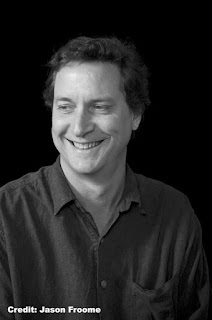
Nicole Kidman placed her hand on my knee. I blushed. She said to relax and not to worry. We were in her trailer at Fox Studios during filming of Baz Luhrmann's Moulin Rouge, just shortly before Christmas 1999. Kim Williams, then head of Fox Studios, was also there, along with Angela Bowne SC. Who knew what would happen? Nicole then put her money on the table, and asked Kim to match it. Kim immediately did, but then to his continuing credit offered to call David Leckie, then head of the Nine Network, asking that Nine match it too. Kim was true to his word, as ever, David happily agreed, and then a few days later the Australian Theatre for Young People had close to half a million dollars over three years.
I recalled this moment at the 50th Anniversary gathering of ATYP at The Wharf in Sydney on 23 February. It was a moment that enabled transformation. I had been appointed Artistic Director of ATYP earlier that year and knew of the challenges facing a company that needed, and was inviting, change.
The Board had asked me to look into a particular possibility: that the company live up to the promise of national reach inherent in its name. It's difficult to make anything in Australia national - geography is tyrannous - but ATYP has had that promise embedded in its very identifier since 1963.
We went about meeting the challenge in a few ways. Why don't we ask 30 youth arts companies from right across the nation, from small regional towns to capital cities, to each send a young artist to something we'd call the National Studio? There they'd meet and work with some of the best professional artists we could muster. Where better to hold the event than in the middle of the country?
It was a bold idea, but sometimes bold is best. In the first year, we grouped in Alice Springs, and then in the few years after that we met at Glen Helen Gorge, about 130 kilometres from Alice Springs, in the western
reaches of the West MacDonnell Ranges on the banks of the Finke, the world's oldest river. Nick Enright, Meryl Tankard, Deborah Cheetham, Kate Champion, Benedict Andrews, Gideon Obarzanek and many other artists of the highest calibre joined us for ten days of free and creative collaboration in the Australian desert. Thanks to Qantas and Coca Cola Amatil, we were able to make the event free. For many of these young people, and for one or two of the artists, it was the first experience of the ineffable wonder of Central Australia.
To be national in Australia also means to be regional. So we created a raft of long-term creative residencies in the Pilbara in WA, in the Northern Territory, in Walgett in Far West NSW, in the Upper Hunter of NSW, and in Tasmania. For sometimes months on end, and returning annually, resident artists encouraged communities to better understand and enjoy the connections between the arts and living.
To be national also means to be international. So we made a production with Theater an der Parkaue in Berlin - Germany's largest theatre for young people - which resulted in a fascinating event at the Sydney Opera House as part of Sydney Festival. We forged a close relationship with the National Theatre's International Connections project in London. This saw an ATYP production invited to London's NT, and then an NT Young Company production head to the SOH.
These were remarkable days. About 6,000 young people aged between three and 26 engaged in our work every year - that's not audiences, that's young people doing things. My own memories though, which I shared on that anniversary weekend, are tied up with people, not projects. That's often so in life. I remember, in particular, three extraordinarily driven women - Carolyn Fletcher, Popsy Albert and Angela Bowne - who encouraged me to believe. I remember the friends I made, bright young people, now into their 30s, who remain some of my very closest, and still bright, companions in life and art.
Long may ATYP prosper.
Carving in Snow
Thoughts on Theatre and Culture
David Berthold
Sunday, March 10, 2013
Nicole Kidman and my knee.
Labels:
ATYP,
Benedict Andrews,
David Leckie,
Deborah Cheetham,
Gideon Obarzanek,
Kate Champion,
Kim Williams,
Meryl Tankard,
National Theatre,
Nick Enright,
Nicole Kidman,
Theater and der Parkaue
Saturday, December 22, 2012
A second week in London theatre
Jacobean playwrights played well together.
They were forever dividing up the playwriting labours. Shakespeare
sometimes wrote with others, but for Thomas Middleton it was a happy
habit. His best play, The Changeling (1622), was written with William
Crowley, who probably wrote the beginning, the end, and the subplot. But
it's Middleton's play.
This production of The Changeling at the Young Vic is instructive. It was a big success in the theatre's small space and here has similar success in the main space, its season already extended. It's good to see Rowley's subplot, so often cut, treated equally. In fact, considerable effort has gone into equalising the two layers of the story. All are bedlam. And there's a lot of wedding dessert that finds its way into bed, in a very Jacobean way. When the food fights begin, all are equal.
But the production instructs in a different away. This kind of production, with its febrile sense of play and its refusal to be bound to a fast concept, despite its contemporary dress, is quite common in Australia. I found it familiar. But here it's unusual. English productions of plays of this period tend to be straight-jacketed to a particular time and place. The Donmar Warehouse Julius Caesar, set in a contemporary women's prison, and now playing, is a good example. It could never break from that simple idea. It was interesting to read reviews of Benedict Andrews' production of Chekhov's Three Sisters in this same theatre just a few months ago. I've had a few conversations with colleagues over the last few days who saw it and thought it a good and relatively tame and quite friendly version of the play from Benedict, especially compared to his version for Sydney Theatre Company in 2001, which I saw and mostly admired. But the Young Vic version sent some of the English critics into apoplexy.
Why is it that?
This production of The Changeling at the Young Vic is instructive. It was a big success in the theatre's small space and here has similar success in the main space, its season already extended. It's good to see Rowley's subplot, so often cut, treated equally. In fact, considerable effort has gone into equalising the two layers of the story. All are bedlam. And there's a lot of wedding dessert that finds its way into bed, in a very Jacobean way. When the food fights begin, all are equal.
But the production instructs in a different away. This kind of production, with its febrile sense of play and its refusal to be bound to a fast concept, despite its contemporary dress, is quite common in Australia. I found it familiar. But here it's unusual. English productions of plays of this period tend to be straight-jacketed to a particular time and place. The Donmar Warehouse Julius Caesar, set in a contemporary women's prison, and now playing, is a good example. It could never break from that simple idea. It was interesting to read reviews of Benedict Andrews' production of Chekhov's Three Sisters in this same theatre just a few months ago. I've had a few conversations with colleagues over the last few days who saw it and thought it a good and relatively tame and quite friendly version of the play from Benedict, especially compared to his version for Sydney Theatre Company in 2001, which I saw and mostly admired. But the Young Vic version sent some of the English critics into apoplexy.
Why is it that?
Labels:
Alan Bennett,
Almeida,
Lucy Prebble,
Middleton,
National Theatre,
Nick Dear,
Rupert Goold,
Shunt,
The Changling,
The Effect
Friday, December 14, 2012
A week in London Theatre
I’m in London
for a few weeks and thought I’d share a few observations about what’s on in town.
I caught the all-male Twelfth Night, a transfer from the Globe now playing in the West End. It was performed in
'original conditions' - the production was created for the anniversary of the
first recorded performance of the play in the Middle Temple Hall, and so it suited the comfort of the Apollo Theatre more than it might have. It stars
Stephen Fry as Malvolio and the incomparable Mark Rylance, the oft-proclaimed
greatest British actor of his generation, as Olivia. It plays in rep with
Rylance's Richard III.
I've never 'got' Twelfth Night. I've never found it very funny or interesting. There was a period when it was fashionable to give 'brown' productions, glossing the play with a Chekhovian melancholy. It's never worked much for me, I'm afraid, though I am prone to gentle drifts into ennui and, like Orsino, am often best when least in company.
Every production I've ever done of Shakespeare has been informed in some way by my longtime research into Elizabethan and Jacobean performing practices. Hamlet, Julius Caesar and As You Like It at La Boite have all eaten at that table. The space suits: the Roundhouse and Globe are related. So the production had real interest.
This is one of the most lucid and assured productions of Shakespeare I've seen. It's not an ambitious production, in that it does not test any unusual conception, but it does strive for, and achieve, a quite uncommon and unrushed maturity.
I've never 'got' Twelfth Night. I've never found it very funny or interesting. There was a period when it was fashionable to give 'brown' productions, glossing the play with a Chekhovian melancholy. It's never worked much for me, I'm afraid, though I am prone to gentle drifts into ennui and, like Orsino, am often best when least in company.
Every production I've ever done of Shakespeare has been informed in some way by my longtime research into Elizabethan and Jacobean performing practices. Hamlet, Julius Caesar and As You Like It at La Boite have all eaten at that table. The space suits: the Roundhouse and Globe are related. So the production had real interest.
This is one of the most lucid and assured productions of Shakespeare I've seen. It's not an ambitious production, in that it does not test any unusual conception, but it does strive for, and achieve, a quite uncommon and unrushed maturity.
Monday, October 29, 2012
The Politics of Representation
It's been a fascinating few weeks for the representation of race on stage.
The American playwright Bruce Norris withdrew his very fine play Clybourne Park from Berlin's Deutsches Theater, one of the the top line German-speaking theatres, when he discovered that the theatre intended to cast a white actress in a black role and 'experiment with make-up'. What made matters even worse is that the play, winner of the 2011 Pulitzer Prize and London's Olivier Award for Best Play, deals centrally with race relations. It's not often that we hear of 'blacking up' in the theatre anymore, although the practice is still current in the world's opera houses. Most singers who sing the title role in Verdi's Otello are white and employ make-up. That will happen next year here in Brisbane, for example, when the Lithuanian tenor Kristian Benedikt plays the Moor for Opera Queensland. He will, presumably, 'black up' a little and no one will remark on it.
Labels:
blackface,
Bruce Norris,
Clybourne Park,
Deutsches Theater,
Greg Doran,
RSC,
The Orphan of Zhao
Sunday, August 19, 2012
On Philip Ridley and Tender Napalm
The plays of Philip Ridley: the Marquis de Sade meets Liberace. That's not me, that's an American critic whose name escapes me, but it's not a bad description.
I begin rehearsals tomorrow for Ridley's Tender Napalm, for La Boite Theatre Company and Brisbane Festival.
To think of Ridley is to think of violence and beauty. His first play, The Pitchfork Disney (1991), produced at London's Bush Theatre, included images of cockroach eating, finger breaking, snake frying and penis scraping. It's a brilliant work, and heralded what later became known as 'In-Yer-Face Theatre', a whole genre of mostly British '90s playwriting that includes work by Antony Neilson, Sarah Kane, Mark Ravenhill, Jez Butterworth, Martin McDonagh and many others. World-beating theatre.
I have never found violence in Ridley's plays to be pointless. Ridley himself has pointed out that travelling Indian magicians would rip the heads off live birds while, at the same time, they pulled an ace from their sleeve. The shock prepares the audience for the perception of magic. In Ridley's world, violence is often used, as well as in a purely narrative sense, to electrify sensibilities and create space for other sensations.
Ridley is an eclectic artist. He had his own theatre group when he was six, completed his first novel by seven, and had his first solo art exhibition at 14. He began a degree in Fine Art at St Martin's School of Art at 17. He began making experimental films there, and has continued doing so. He knew and worked with the 'Brit Pack' of young artists such as Damien Hirst who were beginning to attract notice. Hirst, of course, became famous for a series of artworks in which dead animals (including a shark, a sheep and a cow) are preserved—sometimes having been dissected—in formaldehyde. Ridley's sensibilities were similar, but he chose the theatre as his principal platform.
He also collects stamps.
Sunday, July 22, 2012
Holding the Man
Last week, a film crew landed in my living room. I was to be interviewed for a documentary called John and Tim, being made by Waterbyrd Filmz, about the lives of John Caleo and Timothy Conigrave. Conigrave wrote Holding the Man, a candid and magical memoir of his 15-year relationship with Caleo.
It's a book with a special place in Australian life. It was published by Penguin in February 1995, just a few months after Conigrave's death. It's never been out of print and I think is up to its fourteenth reprint. It's been published in Spain (2002) and North America (2007). It won the United Nations Human Rights Award for Non-Fiction in 1995 and was listed as one of the '100 Favourite Australian Books' by the Australian Society of Authors for its 40th anniversary in 2003. In 2009, it was nice to see Penguin publish it in its $9.95 Popular Penguins orange stripe series. My guess is that it's one of the most 'passed on' of Australian books.
In many ways, it's a simple book. Conigrave was born in 1959 and went to Xavier College in Melbourne, an elite Jesuit school (also attended by Bill Shorten and Sir Les Patterson). Tim, who wanted to be an actor, fell in love with John, the captain of the football team. They declared themselves boyfriends in 1976. Tim went to NIDA and John became a chiropractor, and despite unrelenting obstacles they remained together until John's death on Australia Day, 1992. The book is written in disarmingly straightforward prose, without literary pretension of any kind, and might be read simply as a "growing up in the '70s" story. The book is full of references to music, films and TV programs of the period. It's a lot of fun.
But HIV/AIDS gets in the way. As an account of the devastation caused by that virus in Sydney during the '80s and '90s, it's unsurpassed. If any book can be guaranteed to make you cry, it's this one. It does so, I think, for a range of complex reasons, not the least of which is that it describes a rare love.
I was being interviewed because I was involved in the theatrical adaptation of the book. In 2005, as Artistic Director of Sydney's Griffin Theatre Company, I commissioned Tommy Murphy to adapt the memoir. By November 2006 we had it onstage. We remounted it six times, most recently in 2010 in London's West End.
The interview encouraged many memories to the surface.
It's a book with a special place in Australian life. It was published by Penguin in February 1995, just a few months after Conigrave's death. It's never been out of print and I think is up to its fourteenth reprint. It's been published in Spain (2002) and North America (2007). It won the United Nations Human Rights Award for Non-Fiction in 1995 and was listed as one of the '100 Favourite Australian Books' by the Australian Society of Authors for its 40th anniversary in 2003. In 2009, it was nice to see Penguin publish it in its $9.95 Popular Penguins orange stripe series. My guess is that it's one of the most 'passed on' of Australian books.
In many ways, it's a simple book. Conigrave was born in 1959 and went to Xavier College in Melbourne, an elite Jesuit school (also attended by Bill Shorten and Sir Les Patterson). Tim, who wanted to be an actor, fell in love with John, the captain of the football team. They declared themselves boyfriends in 1976. Tim went to NIDA and John became a chiropractor, and despite unrelenting obstacles they remained together until John's death on Australia Day, 1992. The book is written in disarmingly straightforward prose, without literary pretension of any kind, and might be read simply as a "growing up in the '70s" story. The book is full of references to music, films and TV programs of the period. It's a lot of fun.
But HIV/AIDS gets in the way. As an account of the devastation caused by that virus in Sydney during the '80s and '90s, it's unsurpassed. If any book can be guaranteed to make you cry, it's this one. It does so, I think, for a range of complex reasons, not the least of which is that it describes a rare love.
I was being interviewed because I was involved in the theatrical adaptation of the book. In 2005, as Artistic Director of Sydney's Griffin Theatre Company, I commissioned Tommy Murphy to adapt the memoir. By November 2006 we had it onstage. We remounted it six times, most recently in 2010 in London's West End.
The interview encouraged many memories to the surface.
Tuesday, July 10, 2012
Towards Diversity: La Boite Unlocked
Last night, La Boite Theatre Company hosted a fascinating forum called Towards Diversity. It linked two areas of current interest in the Australian theatre: gender equity and cultural diversity. Both, of course, speak to one of the leading questions of the forum: What
are the forces that prevent our theatres from adequately reflecting the
society in which they operate?
Subscribe to:
Posts (Atom)